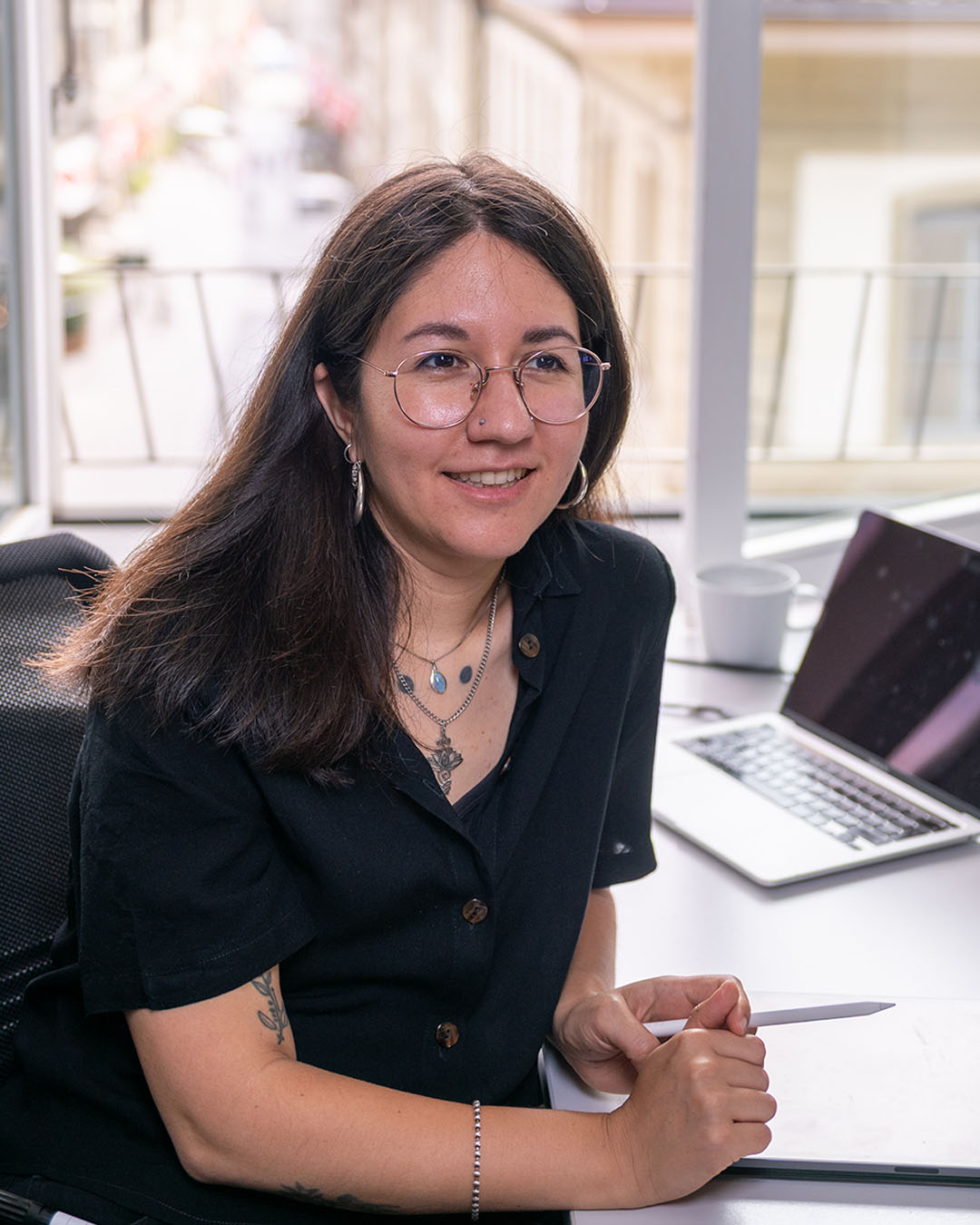
A single day of filming resulted in ten short interviews for employee LinkedIn profiles and the YouTube series Talking Slack.
Slack operates in a market where traditional advertising for collaboration software rarely grabs attention anymore. The most credible advocates are the employees themselves, as they use the product daily and reach the exact target audience Slack wants to engage within their own networks. At the same time, employees only share company content if they benefit from it personally, as purely promotional messages in their feeds tend to harm their personal brand rather than help it.
Instead of promotional videos, we created short interviews in which Account Executives describe in their own words how Slack specifically changes their daily work. We deliberately avoided scripts and memorized lines. Instead, each person received a list of topics and examples from which they chose two or three questions. Filming was done in Swiss German or the language in which the individual felt most comfortable, because authenticity beats perfection.
All interviews were filmed in a single day. The setup included two cameras for close-ups and medium shots, professional lighting, and a deliberately cozy setting with plants instead of a sterile meeting room. Emarket coached the interviewees and guided the conversation. From the footage, Emarket edited ten personalized 4:5 format LinkedIn videos with subtitles, each about 30 seconds long, plus an additional short video. In a second phase, this evolved into the Talking Slack series for YouTube: three 16:9 episodes with name overlays, including a general episode, one on Slackbot, and one on the hospital vertical. All assets follow Slack’s partner branding guidelines.
One day of filming produced ten LinkedIn videos, three YouTube episodes, and one short video. Every participant received an asset they could share via their own profile, allowing Slack to reach new target audiences through employees' personal networks that are otherwise difficult to access via corporate channels. Six months after the first series, the same approach led to the Talking Slack format with its own branding and thematic episodes. A single production has thus become a repeatable format.